If you are thinking about replacing an exterior door, you may wonder what size you need. A door that measures 36 inches wide by 80 inches tall is a common size for exterior doors. But not every home has the same door dimensions.
Older homes and custom homes may have different-sized openings. And a single front door will have different dimensions than an entry with sidelights or a patio door.
It also helps to know what is being measured. The size of the door itself is not the same as the size of the full door unit or opening.
This guide explains common door sizes, basic measuring terms, and what to consider when planning an exterior door replacement.
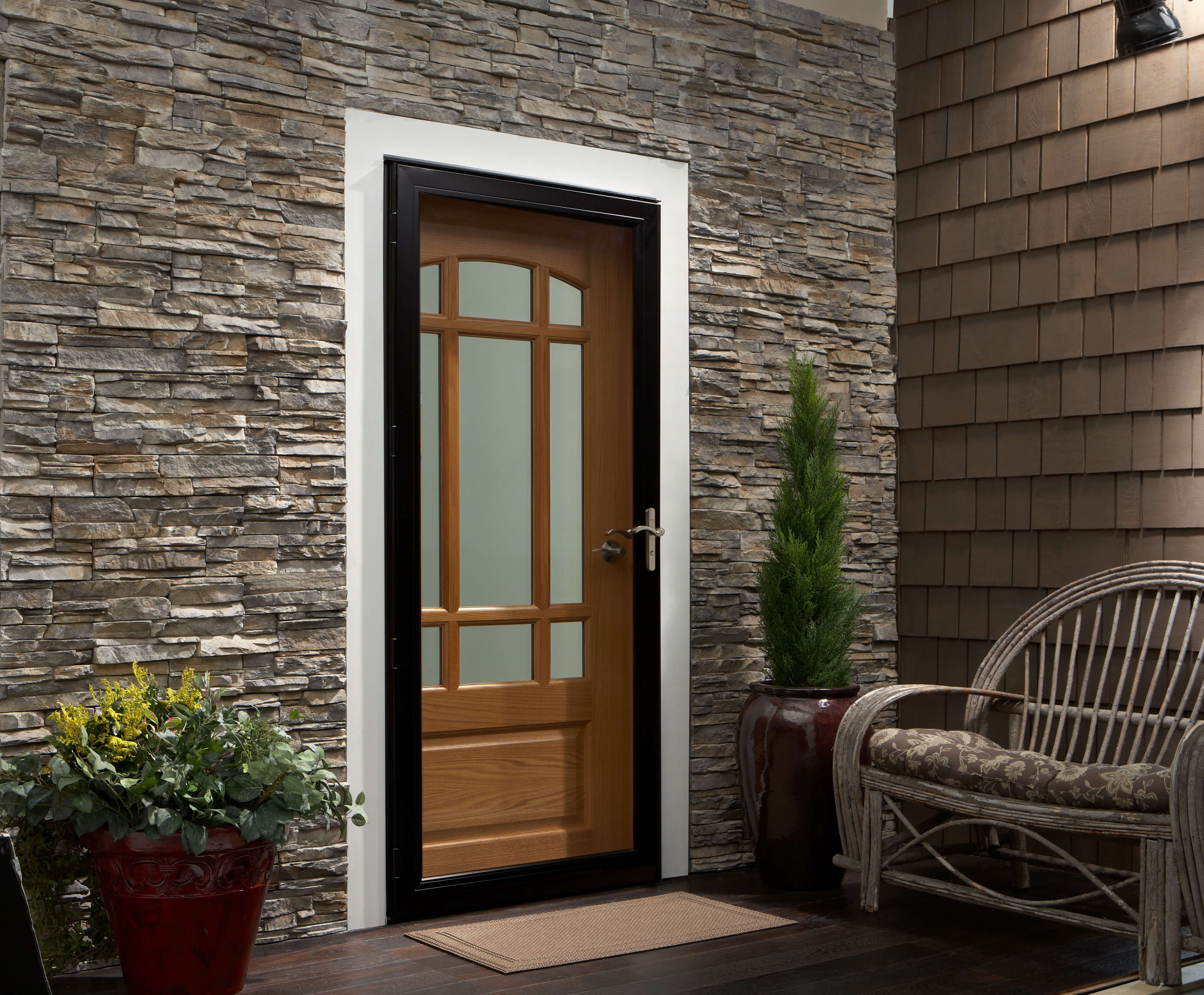
Common exterior residential door widths include 30, 32, and 36 inches. For exterior entry doors, a 36-inch door width is common. A 32-inch door is also found in many homes.
Interior doors are often narrower and may range from 24 to 36 inches wide.
An 80-inch door height is common in residential construction. However, taller doors are also available, and the right height depends on your home’s opening.
Door size measurements usually describe the door slab, which is the part that swings or moves. The full door system also includes the frame and other components.
Keep in mind that “standard” does not mean universal. Your home’s opening may be larger or smaller than these common door sizes.
A 36-inch-wide by 80-inch-tall door is one of the most common exterior door sizes. Taller exterior doors, including 96-inch doors, are also available.
When a door is described as 36 inches wide, that measurement generally refers to the door slab. The complete door unit is larger because it includes the door frame and other parts.
That is why 36 by 80 inches should be treated as a common size, not a rule. Front door sizes can vary based on the home, the age of the opening, and the entry design.
A single front door also has different sizing needs than an entry with sidelights or double doors. In some homes, a custom exterior door size may be the better fit.
Door openings can vary based on when and how a home was built.
Older homes may have openings that do not match today’s common exterior door sizes. Previous renovations can also change the size or shape of an entry.
Some homes were designed with larger entrances from the start. Sidelights and double doors can also make the complete opening much wider than a single door.
This is why choosing a replacement door is not simply a matter of finding the most common door width.
When you think about front door size, look at the entire entry rather than the door slab alone.
A single entry door is the simplest configuration. You can also add one sidelight next to the door. A sidelight is a narrow glass panel that can bring more natural light into your entry.
Two sidelights extend the entry on both sides. Double front doors create a wider entrance and may suit homes with larger entryways.
Because these configurations vary, there is no single overall door width that applies to all front doors.
Renewal by Andersen Ensemble™ entry doors are available in several configurations. Options include single entry doors, doors with sidelights, and double entry doors. This gives homeowners more flexibility when choosing a design for their space.
Patio doors usually cover a wider opening than a single front door. In the broader residential market, 60- and 72-inch widths are common reference points for sliding glass doors.
Actual patio door sizes can vary based on the number of panels and how the door operates.
Gliding patio doors move from side to side. Because they do not swing into the room, they do not need extra floor space to open.
Hinged patio doors open on hinges. This means you need enough room for the panels to swing without hitting furniture or other obstacles.
The right size depends on your home’s opening and the configuration you want.
Renewal by Andersen offers custom-sized gliding and hinged patio doors for different spaces and layouts.
Door measurements can be confusing because different parts of the opening have their own dimensions.
These measurements are not interchangeable. The full door unit is larger than the slab alone, and the rough opening needs enough space for proper installation.
You may see general rules about how much larger a rough opening should be than a door slab. However, the required dimensions can vary by product and configuration.
For that reason, knowing your current slab size does not give you every measurement needed for a replacement.
You can take a few basic measurements to better understand your current exterior door size.
These measurements can give you a starting point as you explore replacement doors. However, the door frame and actual opening also matter. A replacement door with the same listed slab size will not always fit the existing space.
You do not need to take the final measurements yourself when you work with Renewal by Andersen. Our team takes the precise measurements needed for your replacement before your new exterior door is ordered.
Door width can matter if you want an entrance that is easier to use with a wheelchair or another mobility device.
The key measurement is the clear opening width, or the usable space you have to pass through the open doorway.
A 36-inch door slab does not automatically provide 36 inches of clear space. The frame, hardware, and position of the open door can reduce the usable width.
As a general accessibility benchmark, ADA guidelines call for at least 32 inches of clear opening. However, ADA requirements do not automatically apply to every private home. Residential building codes can also vary by location. It is important to note that accessibility standards enhance inclusivity and potentially increase market value.
A commonly available door size may work if your existing opening is already suited to those dimensions.
Custom sizing can help when the opening does not match a common size. This can be useful in older homes or when you want to change the entry configuration.
For example, adding sidelights can change the overall width needed for the new door system. Patio door openings can also vary widely from home to home.
The goal is to choose a replacement door that fits the home rather than trying to force the opening to match a standard size.
Knowing common door sizes can give you a helpful starting point. But the right replacement exterior door depends on your actual opening.
Renewal by Andersen offers custom-sized patio doors as well as Ensemble™ entry doors in several configurations. Professional design guidance and precise measurements can help you find the right option for your home.
Our team takes precise measurements before your replacement door is made for your home. Certified Master Installers then complete the installation.
Ready to explore your options? Schedule a free consultation with Renewal by Andersen to find an exterior door that fits your home.
A door that measures 36 inches wide by 80 inches tall is a common exterior door size. These dimensions usually refer to the door slab.
Yes. A 32-inch door is found in many homes. For exterior entry doors, 36 inches is also a common width.
The 36-inch measurement generally refers to the nominal width of the door slab. The full door unit and rough opening are wider.
No. Front doors vary in width, height, and configuration. Sidelights and double doors can also change the size of the complete entry.
Not always. Your options depend on the existing opening, surrounding structure, and new door configuration. Custom sizing can provide more flexibility.